Facts and requests
A requested specification is not proof of supplier capability. Catalog entries describe inquiry options. A test, certificate, stock statement or delivery date belongs to a particular supplier reply and needs verification.
Know who is helping you buy
Our role is to organize the questions between a business buyer and prospective rotary tiller manufacturers. A product directory is a conversation starter; a supplier's written offer establishes the proposed configuration and terms.
We use a requirement-led approach rather than presenting an unsupported company timeline. The steps below follow the life of a procurement brief, from an initial field description to a documented purchase decision. They are a working method, not a claim about completed projects.
A grower may know the crop and tractor but still be deciding the working width. An importer may need several configurations for different carriers. Record those differences without treating every inquiry as the same tiller. Keep the original quantity, destination and delivery objective visible alongside the technical questions.
Require a recognizable model or configuration reference and its supporting specification sheet. PTO horsepower, three-point hitch geometry, working width and drive arrangement need to relate to that exact item. Documents from another model cannot settle compatibility. Any proposed alternative receives its own line and explanation.
Compare the offered unit, parts, guarding, packing and support documents with the request. Separate price, optional extras and shipment costs. If a dimension, manufacturer declaration or receiving responsibility is unanswered, retain it as an open item rather than assuming acceptance. The buyer decides whether a revised scope meets the intended use.
A requested specification is not proof of supplier capability. Catalog entries describe inquiry options. A test, certificate, stock statement or delivery date belongs to a particular supplier reply and needs verification.
The least expensive equipment line may have a different spare-part package or trade term. Budget and supplier preference guide the search, while fixed interface requirements remain unchanged unless the buyer expressly accepts a revision.
Procurement coordination does not replace manufacturer operating instructions, engineering approval, customs advice or local service arrangements. Confirm who provides each item before relying on it in the farm's seasonal plan.
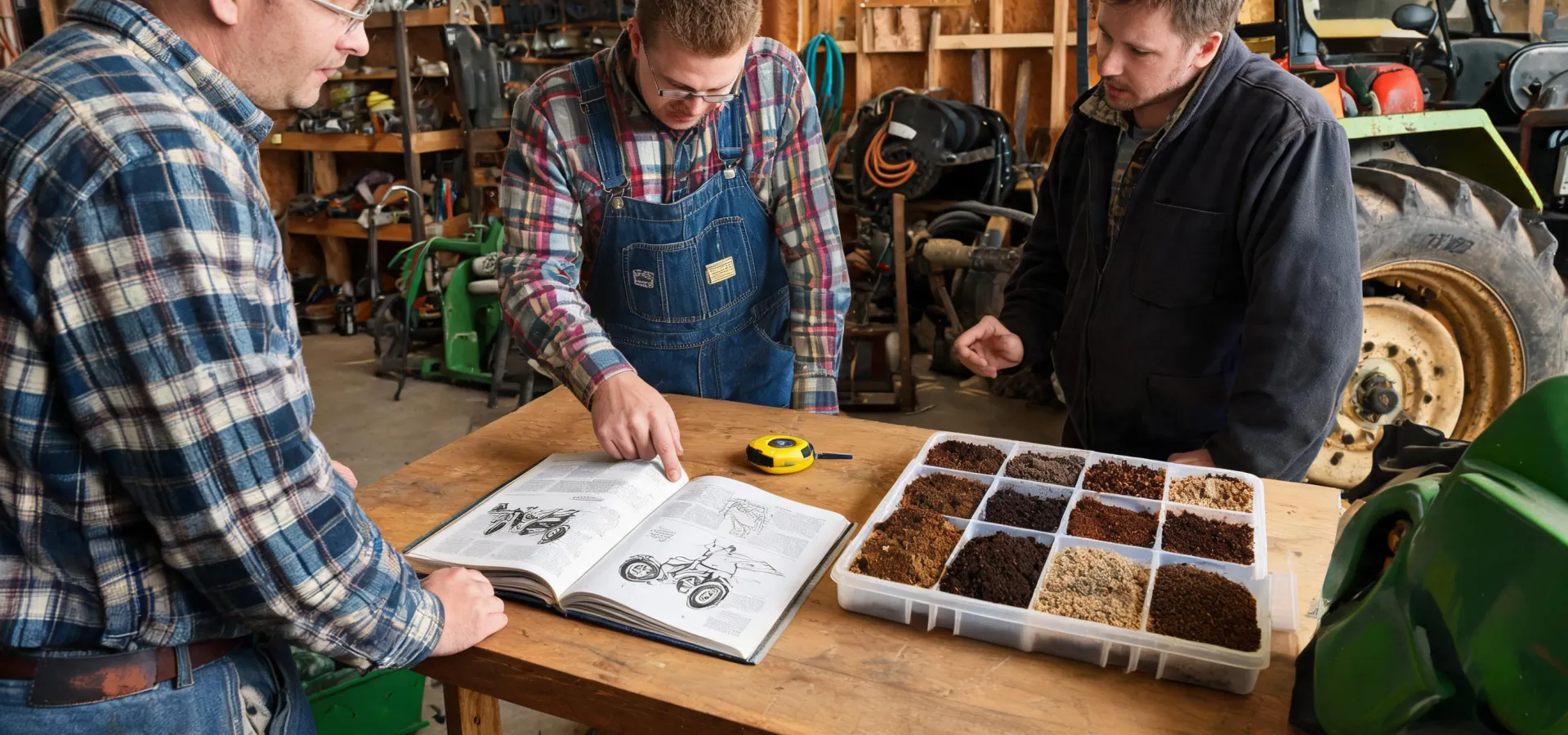
These illustrated roles describe a buying team, not named Grove Source staff. Invite the relevant people to review the same configuration so commercial and operating requirements do not drift apart.

Confirms carrier details, field access, crop task and maintenance expectations.

Checks quote scope, payment conditions, quantity basis and optional budget.

Defines unloading, packing evidence, transport access and delivery coordination.
These labels are a review list, not certifications held by this site or a supplier. The manufacturer product-family reference informs equipment vocabulary only; it establishes no affiliation or supply relationship.
Bring your unresolved attachment or delivery questions to the inquiry page, or explore Grower Support for a practical comparison worksheet. A clearer scope helps the next supplier conversation.
Share a procurement brief